Pulse Sensor monitors Heart Beats and easily interfaces to an Arduino

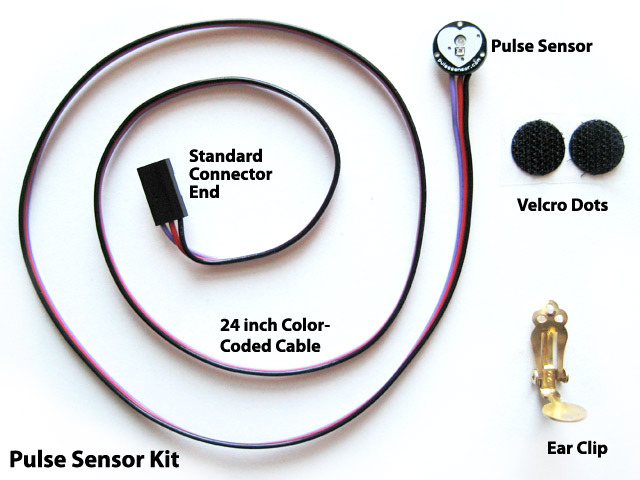
  Check out this Pulse Sensor which monitors Heart Beats and easily interfaces to an Arduino. This could be used for lots of creative applications. Think of cool clothing that blinks to your heart beat. It would be neat for fitness instructors to be able to look at the ear lobe of their students to determine their approximate heart rate and if the exercise plan should be altered to optimize

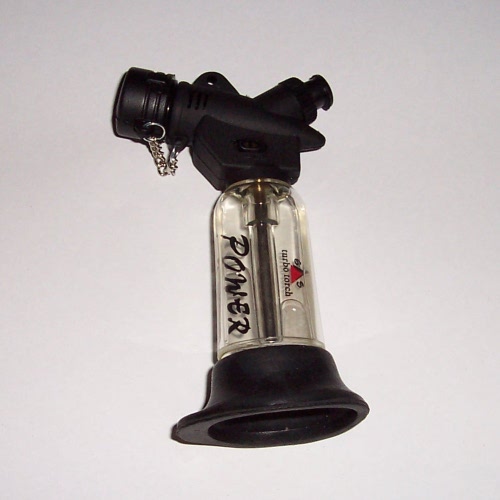
Name the Thing Contest – 195

  The prize this week is a jet lighter, just what you need when you are starting that campfire with damp wood. This contest will run for the rest of the year (December 27 – 31, 2011). Ending time is based on central standard time. To enter, identify the item above and what it can be used for. Please do not give the answer in the comments. Send an email

Cost-effective replacement for CdS Light Sensor

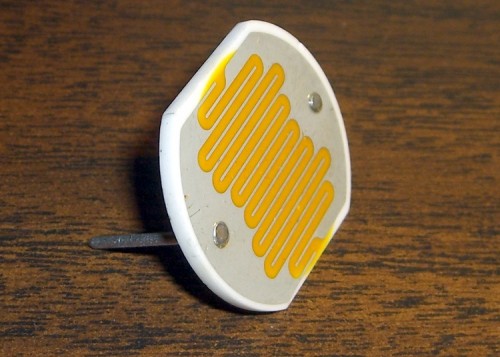
  CdS (Cadmium Sulfide) photo-resistors are fairly cheap and widely used light detectors. Since CdS cells contains Cadmium, a toxic heavy metal, has now become hard to find. The reason is because of the RoHS directive. Electronics-lab has reported an excellent alternative for CdS that is more versatile and cost-effective. The idea is that when you are building a micro-controller based circuit such as a PIC or Arduino, then you can use a simple LED

Sensing 3D surfaces with Gelsight

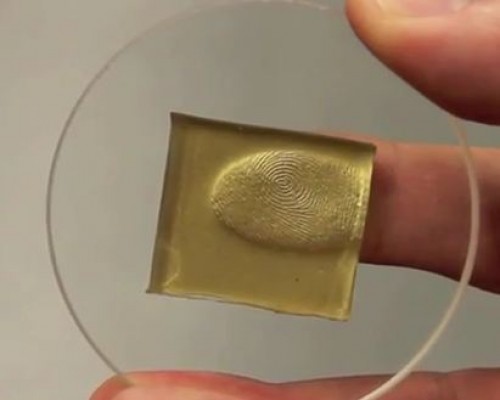
  GelSight, a new 3D surface sensing material can be used to visualize and measure surfaces. Zedomax member reports that GelSight is a pretty top-notch stuff that can detail at even microscopic levels. “The optical property of the material is making it very complicated to see the surface structure”, said Johnson, co-founder of GelSight, Inc. For more information, you can read the paper presented at SIGGRAPH 2011 named: “Microgeometry Capture using

Cool Color Table integrated with 64 RGB LED Matrix

Hackedgadgets member Alan Parekh shared a great work carried out by Edo at Hamburg University, Germany. He build a real cool color LED table comprising of 64 sections of RGB LED’s arranged in a matrix of 8X8. The table is controlled by Arduino Duemilanove microcontroller. “Materials used: 1 Arduino Duemilinove microcontroller, 12 Texas Instruments TLC5940 16-channel LED drivers 64 numbers of 5mm RGB LED Table dimensions : 50×50×12 centimeters Cladding

Tiny Bipolar Stepper Motor Control

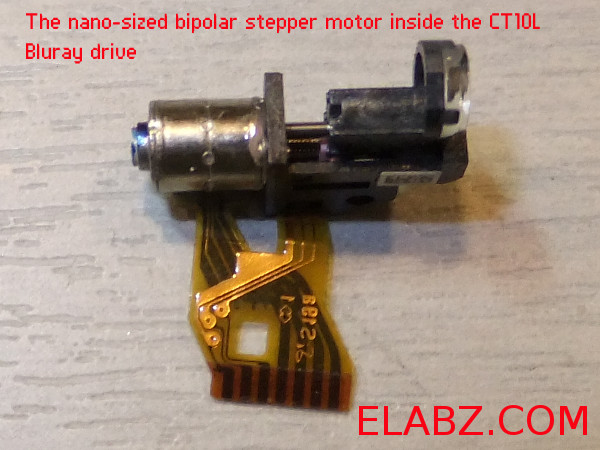
  Check out the super macro video of this Tiny Bi-Polar Stepper Motor being controlled with an Arduino. This great part was scavenged from a blu-ray player.  This cute little motor has only 20 steps per revolution which is much less than the number of steps you would find in the large style steppers. I can normally think of a bunch of project ideas from every bit of electronics I